Evolution of Fossil Fuel Subsidies in Morocco
Morocco's dependence on fossil fuels is not only an environmental and health issue; it also constitutes a structural constraint on its economy. Every dirham spent on importing coal, oil or liquefied natural gas (LNG) is a dirham that does not circulate within the national economy, does not create jobs in Morocco, and does not strengthen the country's industrial capacities. Conversely, investments in renewable energy generate local added value through the manufacture, installation, operation and maintenance of infrastructure. Phasing out fossil fuels is therefore not a sacrifice, but the foundation of Morocco's economic competitiveness and long-term sovereignty.
The fossil fuel subsidy regime in Morocco has undergone a profound transformation over the past two decades. Before 2012, the Compensation Fund operated as a general price stabilisation mechanism covering petrol, diesel, fuel oil, LPG, sugar and flour. At its peak in 2012, compensation expenditure reached 56.6 billion dirhams, representing approximately 6% of GDP and 30% of tax revenue, with petroleum products alone accounting for 80% of the subsidy envelope.
The reform programme undertaken between 2012 and 2015 successfully removed subsidies on petrol and industrial fuel oil (in 2014), followed by diesel (in January 2015), thereby reducing compensation expenditure to 12 billion dirhams in 2015. However, this reform did not address butane gas subsidies, due to their strong political sensitivity, leaving a significant structural budgetary burden in place.
The budgetary weight of butane gas subsidies
MAD 124 Billion
Allocated to butane gas subsidies between 2014 and 2023, equivalent to the total budget of the Ministry of Health over the last decade.
30% of the budget
The share of Morocco's national budget for 2026 that the butane gas subsidies paid out over the last decade would have represented.
MAD 1.07 Billion
Average monthly expenditure allocated to butane gas subsidies in 2024.
The consequences of ONEE's financial fragility
-MAD 21 Billion
Net loss recorded by ONEE in 2022 when coal prices peaked internationally.
MAD 100 Billion
Total consolidated debt of ONEE at the end of 2022, representing a significant liability for the public sector.
24% of the debt
Share of ONEE in the overall external debt held by Moroccan public establishments and enterprises.
Updated electricity generation costs (LCOE)
Coal (0.02–0.20 MAD/kWh)
Vulnerable to international market volatility, fuel transportation costs and carbon regulations.
Oil and gas (0.05 to 3.34 MAD/kWh)
Oil remains the most expensive and least competitive option (0.97 to 3.34 MAD/kWh).
Wind (0.17 to 0.74 MAD/kWh)
The most competitive renewable option currently available in Morocco
Solar (0.20 to 0.73 MAD/kWh)
Photovoltaic (PV) solar remains significantly more cost-effective than concentrated solar power (CSP).
Risk of gas lock-in
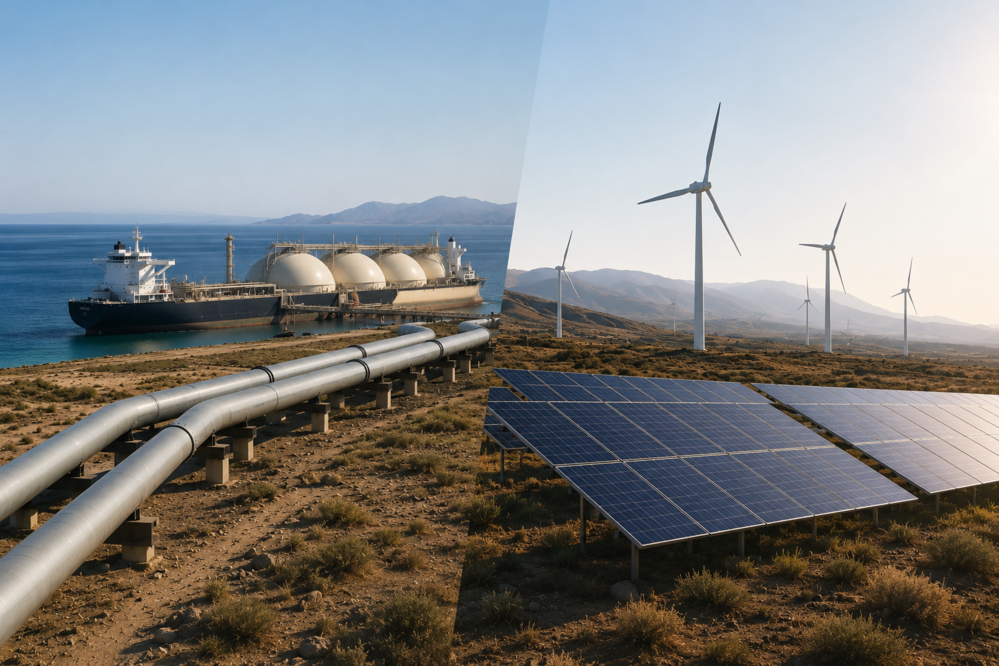
In 2024, Morocco launched a gas roadmap providing for the construction of LNG import terminals at three ports, new gas pipelines and additional electricity generation capacity from gas. This expansion risks leading to a gas lock-in, where long-term investments in gas infrastructure prolong dependence on imported fuels. It could also generate a double cost, as this infrastructure would then need to be replaced by systems based on renewable energy in order to meet decarbonisation targets.